Showing posts with label early art. Show all posts

Sunday, 12 March 2017

Mosaics

Mosaics

Mosaic is the art of creating images with small pieces of coloured glass, stone, pottery or other hard material. These small tiles or fragments  are called tesserae. From the first pebble designs, to the glittering effects of the Byzantine art, to the textured modern abstracts, mosaics have covered the insides  ad outsides of buildings with stunning effect.


Byzantine style

Glass tesserae in many different colours, including gold and silver, were used on the walls and ceiling during the Byzanite period (330-1453). This art was mainly based on religious Christian themes and by tilting the tesserae, light would reflect from the haloes and faces of holy people.
 Byzantine art, architecture, paintings, and other visual arts produced in the Middle Ages in the Byzantine Empire (centred at Constantinople) and in various areas that came under its influence. The pictorial and architectural styles that characterized Byzantine art, first codified in the 6th century, persisted with remarkable homogeneity within the empire until its final dissolution with the capture of Constantinople by the Turks in 1453.

A brief treatment of Byzantine art follows. For a treatment of Byzantine architecture, see Western architecture: The Christian East. For a treatment of Byzantine painting, see Western painting: Eastern Christian.

Byzantine art is almost entirely concerned with religious expression and, more specifically, with the impersonal translation of carefully controlled church theology into artistic terms. Its forms of architecture and painting grew out of these concerns and remained uniform and anonymous, perfected within a rigid tradition rather than varied according to personal whim; the result was a sophistication of style and a spirituality of expression rarely paralleled in Western art.

The earliest Byzantine architecture, though determined by the longitudinal basilica church plan developed in Italy, favoured the extensive use of large domes and vaults. Circular domes, however, were not structurally or visually suited to a longitudinal arrangement of the walls that supported them; thus, by the 10th century, a radial plan, consisting of four equal vaulted arms proceeding from a dome over their crossing, had been adopted in most areas. This central, radial plan was well suited to the hierarchical view of the universe emphasized by the Eastern church. This view was made explicit in the iconographic scheme of church decoration, set forth in the frescoes, or more often, mosaics, that covered the interiors of domes, walls, and vaults of churches in a complete fusion of architectural and pictorial expression. In the top of the central dome was the severe figure of the Pantocrator (the all-ruling Father). Below him, usually around the base of the dome, were angels and archangels and, on the walls, figures of the saints. The Virgin Mary was often pictured high in a half-dome covering one of the four radial arms. The lowest realm was that of the congregation. The whole church thus formed a microcosm of the universe. The iconographic scheme also reflected liturgy; narrative scenes from the lives of Christ and the Virgin, instead of being placed in chronological order along the walls, as in Western churches, were chosen for their significance as feast days and ranged around the church according to their theological significance.


Wednesday, 1 February 2017

Frescoes

Frescoes

Fresco is one of the method used for painting a picture onto a wall or ceiling. Pigaments,the materials that make the colours, are painted onto a surface covered in plaster. Frescoes have been found on the walls of ancient Egyptian tombs and used to create amazing effects on the ceilings of cathedrals.


Roman style

The Romans used a techinuqe called buon fresco (true fresco) to decorate the walls of their buildings. Powdered pigments such as Natural brown and red earths were mixed with water and painted onto the surface of wet plaster, made from lime and sand. As the surface dried and hardened, the pigment 
blended in to colour the plaster. The artist had to work very quickly before the plaster dried.


Egyptian scribes

Egyptian scribes
Hey Guys! This is Akarshan Mondal and you are in Guernica. Today we are going to discuss about one of the most historic and dangerous artform. It started from the Pahroahs till now. It is god's own art to express sacrifices and love.
Egyptian scribes
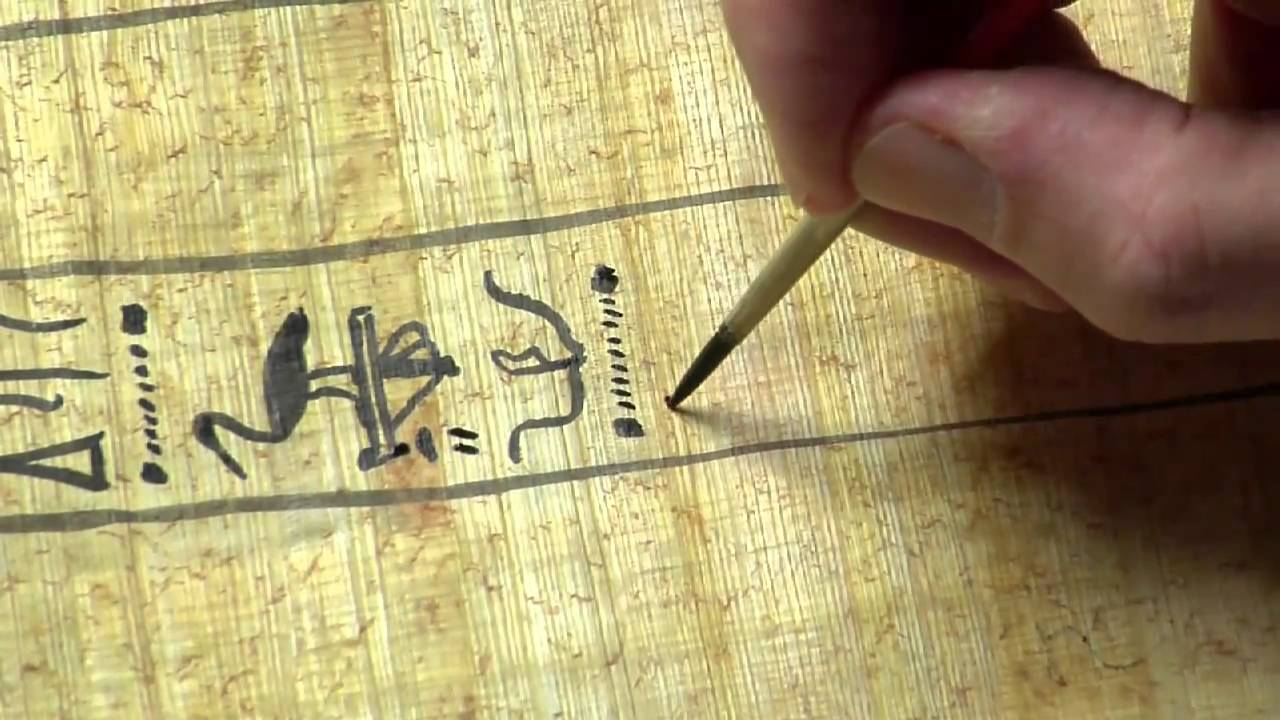
For the ancient Egyptians, art had a specific purpose rather than decorations. In general, most art designed to ease the journey though the afterlife or to worship the gods. Egyptian scribes has a very strict set of rules to follow when painting. Erwin Panofsky, a German art historian, discovered that Egyptian scribes used a mathematical system of grids to make sure all figures were drawn in proportion

                                    maxresdefault.jpg (1280×720)

Book of the Death
The ancient Egyptians were often buried with their own Book of the Death to ensure they passed safely through the Underworld, yo be reborn into a new life. The book would contain a range of texts, including spells and small illustrations known as vignettes. The vignettes were very important as they showed what would happen in the afterlife.


Rocky Beginnings

Rocky beginnings
Hey!Guys.This is Akarshan Mondal and you are on Guernica .Today we will see and know about cave paintings .And the start of a new Painting Era.
Rocky beginnings
In the beginning, there was cave art- the markings of prehistoric man. Although thousands and thousands of years old, the drawings are beautifully preserved often found deep inside a mountain or underground,safe from being worn away by the weather. Imagine in the dim glow of flickering fire,caveman using burnt sticks or dirt mixed with a little water to create their beautiful paintings.


                                                                                                                                                                                                                                                                                                                                                                                European cave art
The impression cave art found at the Lascaux caves in France is known as the "prehistoric Sistine Chapel."The caves were discovered in 1940 by four teenagers, who said to be chasing their dog, robot. No one knows what the paintings were for. Maybe as decoration or graffiti, or for ceremonies on Information ?


African cave art 
The walls of desert caves in Libya, Africa, are covered with pictures of giraffes and other grazing animals. These paintings suggest that in 12,000 BCE, when they were created, the non-barren Sahara Desert was a lush,tree-filled landscape.


Black marks were made using charcoal. This is wood that has been buried under sand and then burnt.


American rock art
This art is found at Newspaper Rock in Utah, USA. It was created by native American Indians before 150 CE. Rather than painting the rocks and the marks gradually washing away over time, the people scratched the oily surface to reveal the lighter sandstone underneath for a lasting image.These images are called petroglyphs.